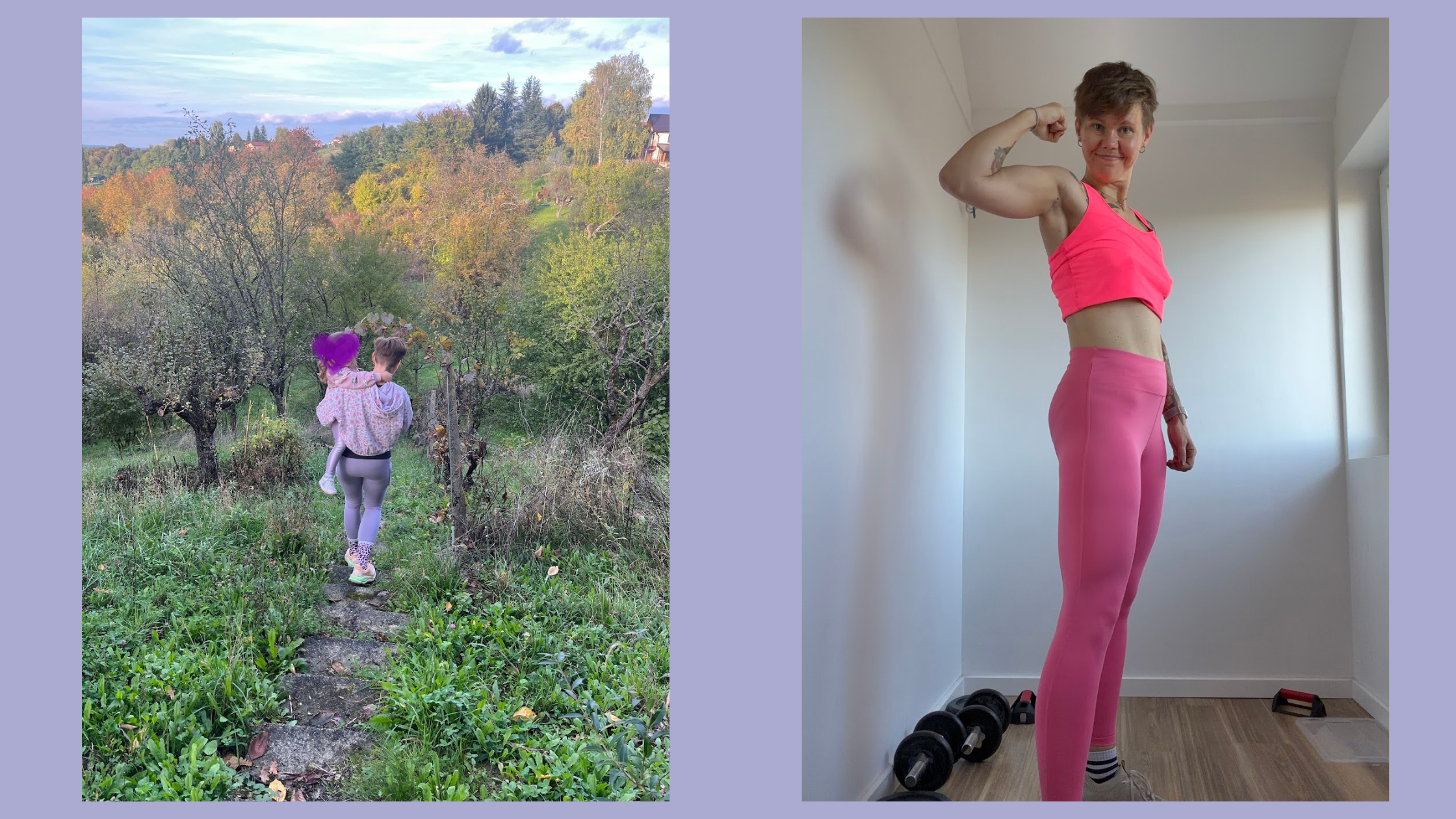
Apparently, after 30, your metabolism packs its bags, files for early retirement, and moves to the Maldives.
That’s what people say, right? “Oh, just wait till you’re 30 – everything slows down.”
Yes, Barbara. Everything does slow down – including you.
It’s not your metabolism, darling. It’s the 10,000 daily steps you stopped taking when Netflix started asking, “Are you still watching?”
People love to blame biology for what is really just… lifestyle inertia. The slow, comfortable kind that comes with office chairs, car seats, and the illusion that “busy” equals “active.”
When I say this, people look at me like I’ve insulted their grandmother.
“No, but it’s true! Your metabolism slows down!”
Sure – if you stop giving it a reason not to.
Here’s the thing: I’m 33. My husband’s 40. And neither of us got the memo that we’re supposed to be falling apart by now.
We eat food that doesn’t come in a crinkly wrapper. We lift things heavier than our excuses. We sleep, hydrate, stretch, and show up – consistently. Not because we’re chasing eternal youth or trying to cosplay fitness influencers, but because we actually want to be here (properly here) for as long as humanly possible.
We want to sit on the floor with our daughter when we’re 60 and actually be able to get up again without a soundtrack of joint cracks and regret.
We want to chase her around, not shuffle behind her.

We want to live, not just last.
But apparently, that level of motivation is “too much.”
People don’t like it when your habits remind them of their neglect.
They’ll tell you you’re obsessed, extreme, restrictive – anything to make your discipline sound like a disorder.
“Oh, you have to live a little!”
Right. Because nothing says living like heartburn, hangovers, and hating your reflection.
I’m not judging – truly. But let’s call it what it is: selective self-destruction, beautifully packaged as “balance.”
And sure, it’s easier to believe in the mythical metabolic slowdown than to accept that maybe, just maybe, you’ve been outpaced by your own apathy.
Look, your metabolism didn’t ghost you. You ghosted it.
You stopped feeding it movement. You stopped challenging it. You stopped asking your body to do anything beyond “survive the day.”
Of course it slowed down – it’s matching your energy.
We live in a world where drinking water is “a wellness trend,” walking is “exercise,” and eating vegetables earns you an eye roll.
Meanwhile, the same people who think I’m “restricting joy” are on their fourth beer, fifth complaint, and second blood pressure pill.
But I’m the weird one.
The irony is that none of this – the training, the food, the early mornings – feels like sacrifice. It feels like investment.
Every rep, every protein shake, every skipped hangover is a deposit into a future I actually want to live in.
And if that makes me “boring,” I’ll take boring over breathless any day.
Here’s what I think people really mean when they say “metabolism slows after 30”:
“My habits caught up to me, and I’d rather not talk about it.”
But here’s the plot twist: the body is remarkably forgiving – until it’s not.
Treat it like a landfill for three decades, and yes, it’ll protest. Treat it like something you want to keep, and it’ll surprise you.
Because health isn’t just about aesthetics. It’s about capacity. The capacity to move, to feel, to participate in your own life without limitations that you volunteered for.
When I’m older, I don’t want to be the mom watching from the bench. I want to be the one still in the game – maybe slower, sure, but in it.
That’s not an obsession. That’s gratitude.
So no, I don’t think our metabolisms are the problem. I think our excuses are overfed and under-exercised.
We traded movement for convenience, purpose for comfort, and then called it “aging.”
So if you want to keep believing your metabolism died at 30, go ahead – host the funeral, light a candle, post a eulogy on Instagram.
Meanwhile, we’ll be over here – defying decay, lifting our “too heavy” weights, skipping our “fun” drinks, and laughing our “boring” asses off.
Because it’s not about living forever. It’s about living well while we’re here.
And when our daughter looks at us one day and sees that we’re still strong, still capable, still showing up – I hope she learns that self-respect looks like work.
If that makes us extreme, then I guess moderation is overrated.
After all, mediocrity might be comfortable – but it’s also contagious.
And we’re not catching it.
Erika Matic writes about transformation, resistance, and the hilarious discomfort of people who think health is a phase. She lifts, parents, and side-eyes the myth of the “aging metabolism” – all while eating an offensively good protein pancake.
Leave a Reply