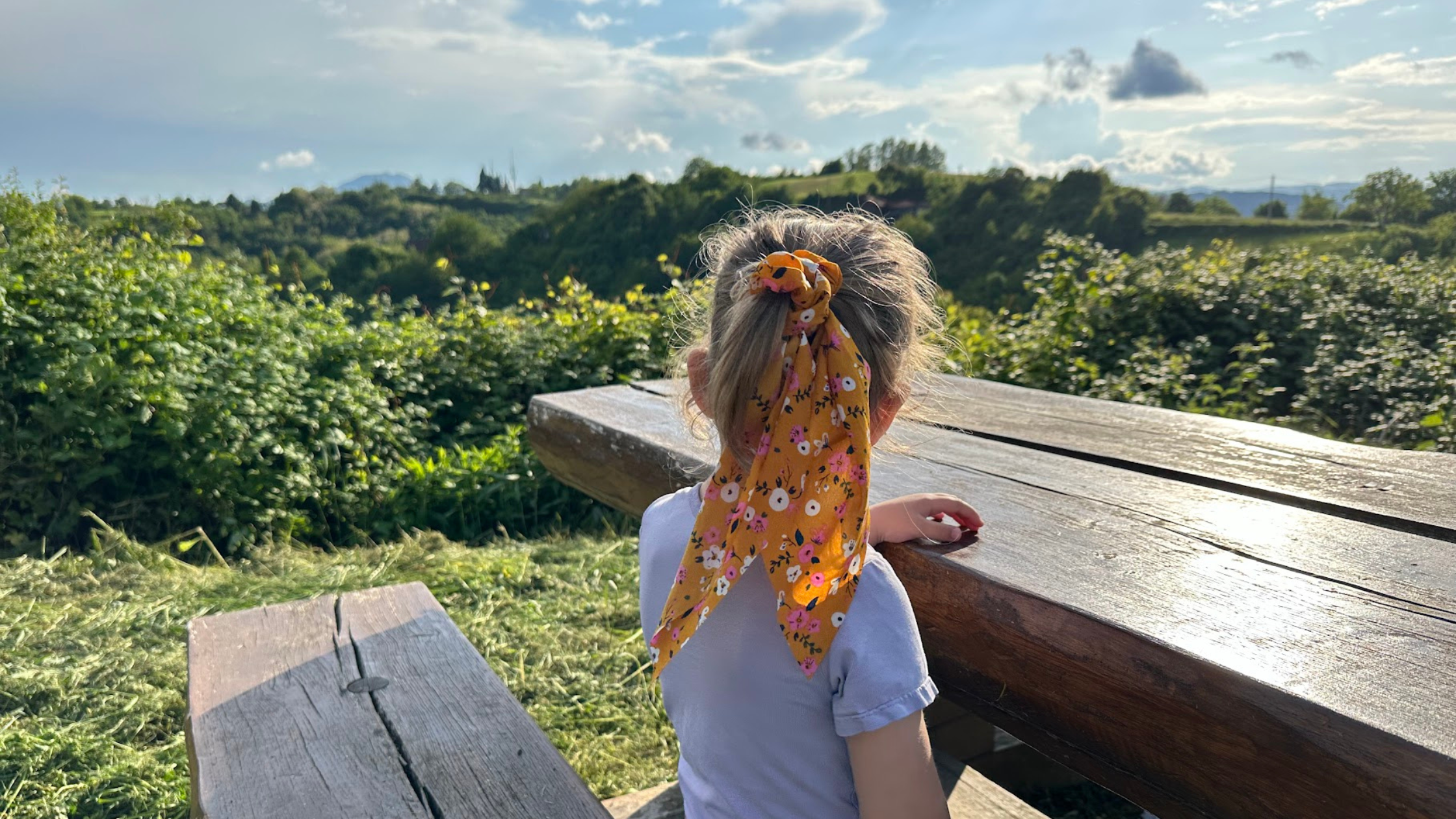
Two weeks ago, my parents’ dog died. He was old, as dogs tend to be right before they die, and everyone handled it differently. My parents cried, I was sad in that quiet adult way children always notice, and my daughter – three and a half years into existence – stood in the middle of the living room and asked, “Did Max die?”
And just like that, The Death Question entered our household.
Naturally, the dog’s death made her curious about the hierarchy of mortality. We told her the sort of story parents tell when they’re improvising comfort: that he’s gone, that he was really old, and that it happens. She accepted it, or seemed to, and then wandered off to find her favorite cat, Sunshine.
It’s always Sunshine. We have three cats, but Sunshine is hers – the one who tolerates toddler hugs, who sleeps on her pillow, who has unknowingly become her emotional support mammal.
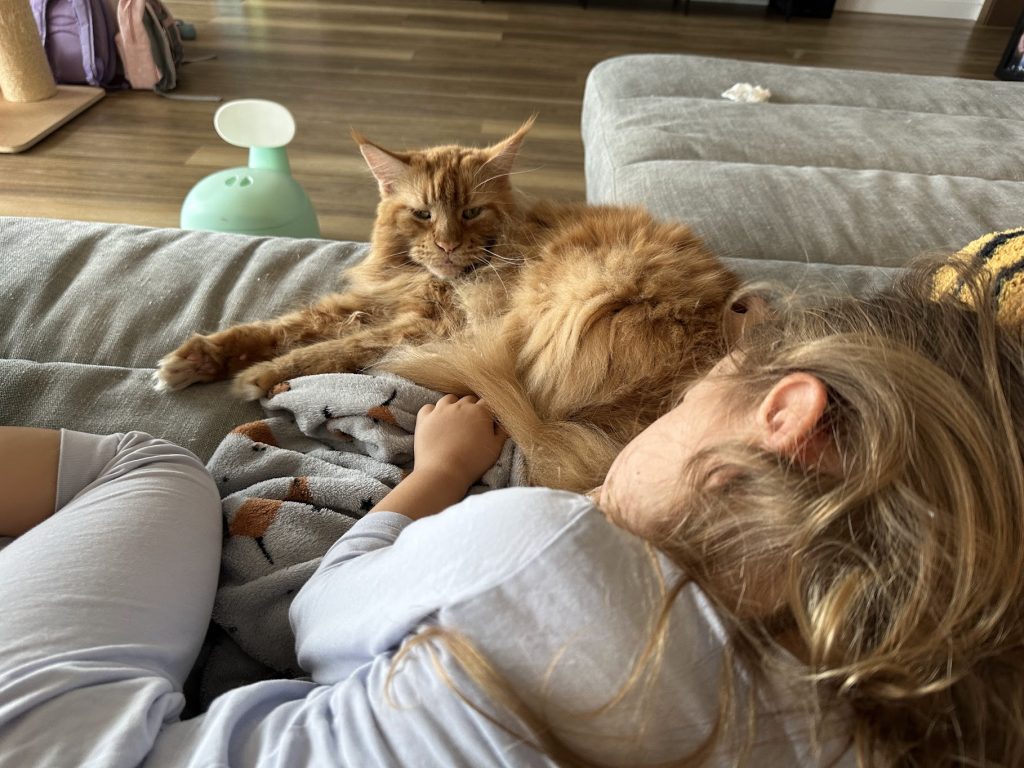
So when the dog died, she started watching Sunshine more closely. “Is Sunshine going to die?” she asked one morning, voice small but serious, like a scientist about to deliver bad news.
We said the standard line: “Yes, but not for a long, long time.”
She nodded, but I could see her thinking – as if she’d just discovered that all the best parts of her world came with expiration dates.
Yesterday, she asked again. This time, her eyes filled with tears. “I don’t want Sunshine to die.”
And there it was – the moment every parent dreads and admires at once: when your child begins to understand that love is a risk.
Then, this morning, she leveled up. She asked her father, in that same tiny-serious voice, “Are we going to die?”
He froze. Mid–brushing her teeth, mid-life, mid-sentence. You could practically hear the Windows error chime in his head.
There are no parenting books for this exact second. He looked at her. She looked at him. And in that moment of mutual paralysis, the entire philosophical weight of the human condition hung in the room like steam.
He should’ve said, “Yes, but not for a long, long time.” That’s the responsible parent’s way of saying it’s true, but you’re safe.
Instead, he said nothing. Just stood there, emotionally buffering, while she waited – a child staring at her father for reassurance that he would not, in fact, vanish.
And honestly, who can blame him? How do you explain death to someone who still thinks she can talk to cats?
She’s not morbid. She’s not being dramatic. She’s just noticing. A few weeks ago, death was a word she’d overheard; now it’s a possibility she can’t unsee.
She saw how sad I was when the dog died. The quiet in the room, the softness around all the words. She’s learning that things – dogs, people, even Sunshine – don’t last forever.
It’s a brutal education, and she’s acing it.
When she asks again (and she will) I hope we get it right. I hope we can tell her that yes, everyone dies, but that doesn’t make life smaller. It makes it sharper. It means Sunshine’s purr matters. Pancakes matter. Mornings like this one matter, even when they come with impossible questions.
Because one day, she’ll know the answer. And when she does, I hope she remembers this: that once, when she was three and a half, she loved a cat named Sunshine so much that she couldn’t bear to imagine a world without her. That her father froze because the question was too big, and her mother tried to make it smaller with words like, “not for a long, long time.”
And that all of it – the fear, the love, the curiosity – was just another way of saying: we are alive, and we know it.
Every generation rediscovers mortality like it’s a new app. The Victorians wore black for a year. Millennials write essays about burnout. My daughter will probably code a digital shrine for her virtual cat.
But here, in the microcosm of our living room, she’s learning the thing we all keep trying to forget: the world is temporary, and so is everyone in it. And yet, we make breakfast anyway.
So yes, our daughter has started asking if we’re going to die. And maybe, in her small way, she’s reminding us to live a little harder – to pet the cats more, to eat the pancakes, to answer the impossible questions with as much honesty as we can muster before caffeine.
After all, one day she’ll stop asking. And when that day comes, I hope she remembers that once, in this house full of fur and pancakes and worry, we told her that yes – everything ends.
But not for a long, long time.
Erika Matic is a writer, observer of small domestic crises, and curator of human absurdity. She lives with her husband, daughter, and three cats who are currently very much alive – for now.
Leave a Reply