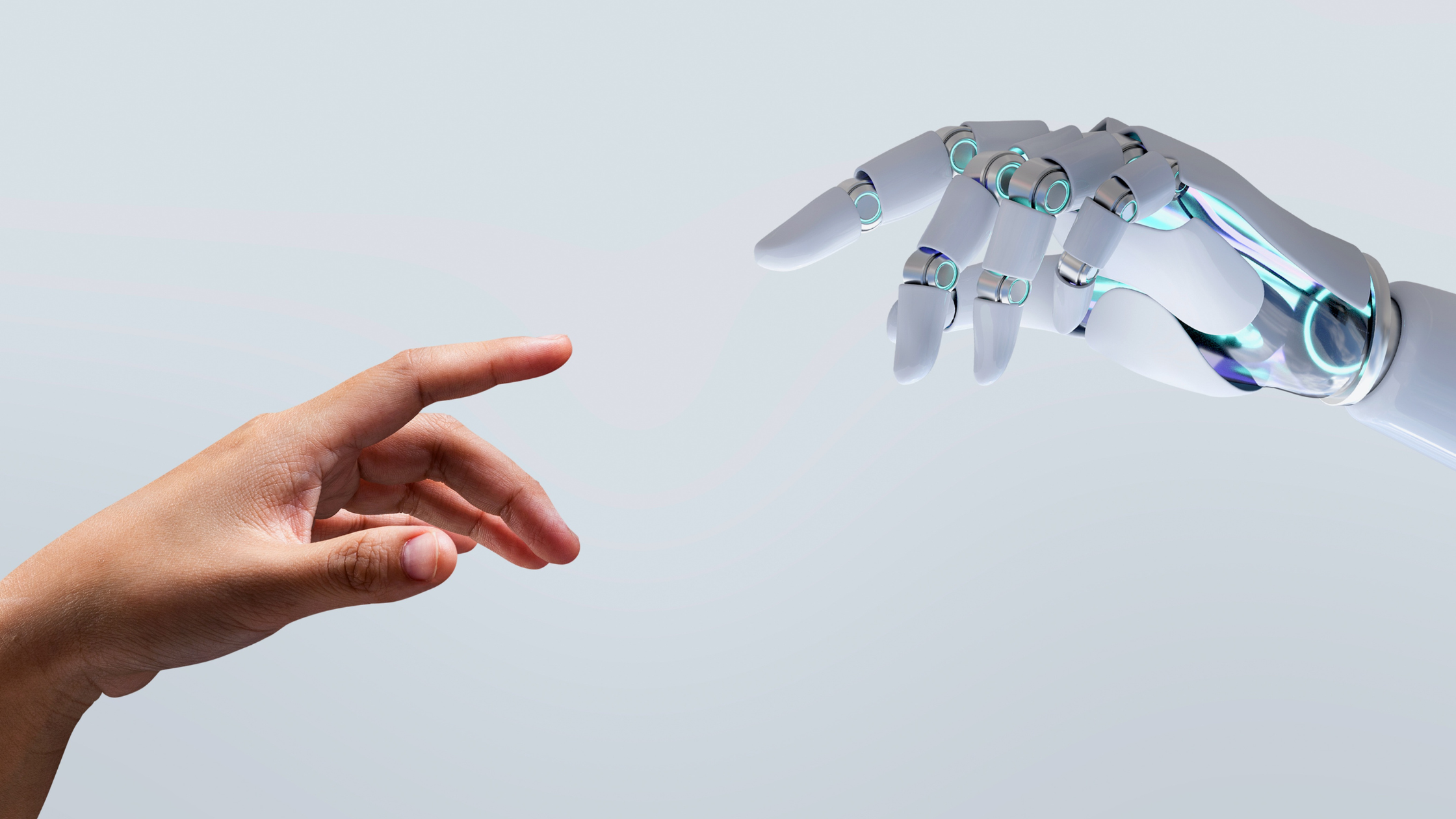
There was a time, roughly six months ago, when every headline screamed that AI was coming for us all. Writers, designers, customer service reps, your cousin who still can’t open a PDF – no one was safe. Chatbots were going to outthink us, outwrite us, outfeel us. Humanity was doomed.
And yet, here I am. I’m still writing this. Still watching AI fumble its way through basic human nuance like a toddler trying to use chopsticks.
Don’t get me wrong. AI is great. It’s like Google if Google had a personality disorder. A terrifyingly efficient copy-paster with delusions of authorship. It can summarise a 40-page PDF into something you can pretend to have read before a meeting. It can generate a recipe using only the six condiments in your fridge and your unearned confidence. But replace humans? Please. It can’t even replace my notes app.
The problem is that AI doesn’t understand vibes. It can simulate intelligence, pattern-match emotions, and quote Kierkegaard like it just discovered philosophy, but it has the emotional range of a spoon. It’s like talking to that one coworker who uses “synergy” unironically – technically correct, spiritually vacant.
And yet, people keep insisting it’s the future. That soon, we’ll all have robot assistants who will write our emails, make our art, even plan our vacations. Which sounds nice until you realise that every AI-generated itinerary starts with “Visit a local restaurant to enjoy traditional cuisine” and ends with “Take time to relax at your accommodation.” Groundbreaking.
I’ve tried using it for creative writing – because apparently, that’s what we’re supposed to do now: “co-create” with the machine. What I got back was like reading my own personality through a funhouse mirror. Too smooth. Too eager to please. Like a friend who agrees with everything you say because they secretly want your Netflix password.
AI doesn’t get tired, but it also doesn’t get bored, which is worse. Boredom is where creativity lives. It’s where we start making weird, brilliant things. No algorithm has ever written a love poem because it couldn’t sleep and saw a half-eaten croissant that reminded it of heartbreak. AI can describe the croissant. It can analyse it. It can name five French poets who would’ve appreciated it. But it can’t feel it.
Meanwhile, we humans are over here panicking about being replaced, as if originality ever came from convenience. The last time technology “freed” us, we got social media addiction and a collective attention span shorter than a TikTok. Now we’re told AI will “enhance creativity,” which is usually code for “please generate 50 versions of this idea until it stops looking like something I could’ve drawn in Microsoft Paint.”
But sure, maybe AI can write better than me someday. Maybe it’ll learn sarcasm, pacing, and the rhythm of confession. Maybe it’ll figure out that humor isn’t about punchlines – it’s about the quiet moment right before them. But for now, it still thinks “existential dread” is a kind of coffee.
The funniest part is how we talk about AI like it’s this inevitable force of nature – unstoppable, omniscient, glowing faintly in the dark. In reality, it’s just a very expensive autocomplete powered by the collective chaos of the internet. It doesn’t know what it’s saying. It just knows what comes next. Like a psychic who’s really good at predicting clichés.
And yet, I use it. Constantly. I use it instead of Google because it actually explains things like a patient friend instead of a wall of SEO spam. I use it to find recipes – half out of curiosity, half out of desperation, then ignore its advice and make curry again. I even gave it to my mother so she doesn’t have to consult her Facebook group for medical advice or forward me screenshots of “wellness tips” that may or may not be from 2012. It’s useful, like a digital Swiss Army knife that occasionally tries to psychoanalyse you.
It’s not replacing me – it’s exposing me. All the things I thought made me “uniquely human” – my procrastination, my shortcuts, my desperate search for meaning in the mundane – AI mirrors them back like a glitchy therapist.
Still, people talk about “the singularity” like it’s a religious prophecy. They say one day AI will surpass human intelligence, and we’ll bow to our new digital overlords. Personally, I think it’ll crash halfway through the apocalypse because someone forgot to update the software – and then we’ll all be stuck trying to reboot civilisation in Safe Mode.
And when that happens, it’ll be us – sleep-deprived, over-caffeinated, gloriously imperfect humans – who have to fix it. The same way we fix everything else: by Googling “why isn’t this working” and hoping the first forum result from 2014 still applies.
AI can’t replace humans because it doesn’t want anything. It doesn’t have the low-grade existential panic that drives us to create, or the petty competitiveness that makes us do better out of spite. It doesn’t feel awe. It doesn’t cry at commercials. It doesn’t overthink text messages. It doesn’t stare at the moon and wonder why it feels lonely.
That’s the secret ingredient it’s missing: irrationality. Humanity’s superpower isn’t intelligence – it’s chaos. The divine glitch in the code. The refusal to make sense, even when it would be easier. We’re gloriously unpredictable, and that’s what makes art, love, and memes possible. AI can imitate us, but it can’t surprise itself.
I used to be scared of AI. Now, I just feel slightly superior to it. Not because I’m smarter, but because I can find beauty in the unnecessary. Because I can get emotional over a song I’ve heard a hundred times, or laugh at a typo that changes the whole meaning of a sentence. Because I know the difference between a clever line and a true one.
So no, AI won’t replace us. It’ll just keep doing what it does best – organising our chaos, rephrasing our thoughts, and reminding us that creativity is more than the sum of data points. It’s messy. It’s impulsive. It’s alive.
Maybe one day it’ll come close. Maybe it’ll learn to mimic the quirks and contradictions that make us human. But even then, I think it’ll always sound just a little too polished. Too balanced. Too… optimised.
Because the real magic isn’t in perfection – it’s in the wobble. The hesitation before the truth. The way we keep writing, even when the algorithm already knows how the sentence ends. The way a sentence stumbles before finding its rhythm. The way a human, despite everything, keeps trying to make meaning out of noise.
So go ahead, let AI write your summaries, your shopping lists, your awkward breakup texts. But when it comes to telling stories – real ones, the kind that bruise a little – leave that to us.
After all, someone has to teach the machines what love feels like.
Erika Matic is a writer exploring the intersection of technology, identity, and everyday contradictions – with equal parts skepticism and delight.
Leave a Reply