Spoiler: The world didn’t end.
Apparently, adulthood means never being fully free – just switching from your parents’ expectations to your own guilt about disappointing them.
Because even at thirty-two, with a husband, a daughter, and three cats who behave like landlords, I still feel like a traitor every December.
The holidays are approaching – the season of joy, lights, and emotionally charged group chats. My mother has already begun her annual campaign with the gentle opener:
“So… what are your plans for Christmas Eve?”
Translation: Choose wisely.
Ah, tradition.
The Family Expectation Economy
Family expectations are like inflation: invisible, inevitable, and somehow always rising.
For three decades, my parents were the gravitational centre of every celebration. Christmas Eve, Christmas Day, Easter, random Tuesdays when the soup turned out especially good – all roads led home.
And now, the moment I suggest that maybe, just maybe, Christmas Eve could happen in my living room, I’m treated like I’ve proposed banning Santa.
Because in the Family Expectation Economy, love is measured in hours spent driving, not boundaries drawn.
You don’t prove affection through words or calls. You prove it by showing up early, peeling potatoes, and pretending not to notice your mom’s annual speech about “how quiet it’ll be without everyone here.”
The Guilt That Glitters
Here’s the thing: I adore my parents. I really do. But every year, around mid-November, something primal awakens inside me – a guilt gremlin that whispers, “You’re ruining Christmas.”
It’s not ordinary guilt. It’s intergenerational guilt in a sparkly sweater. The kind that says:
“You’re abandoning tradition.”
“Your parents won’t be around forever.”
“Your sister still lives nearby – she does so much more than you.”
Ah yes, the sibling guilt Olympics – where medals are awarded for proximity and self-sacrifice.
Meanwhile, I’m over here trying to build something new. A slower, softer kind of joy.
One that doesn’t involve negotiating three different family schedules and an existential crisis about mashed potatoes.
“Back in My Day”
My mother loves that line.
“Back in my day,” she says, “we didn’t split holidays. Families stayed together.”
Of course they did. There were no group chats, no travel logistics, no emotional boundaries. Togetherness was a full-time job.
But today? Togetherness is a choice. And choosing differently looks, to them, like rejection.
It’s not rejection. It’s a renovation.
We’re not tearing the house down. We’re just expanding it – making space for the lives we’ve built outside it.
The Sister Trap
Every family has one – the Chosen Local.
She’s the one who “happens” to live nearby and therefore “naturally” becomes the emotional support daughter.
Mine is my youngest sister. She’ll be there on Christmas Eve, performing peacekeeping duties while texting me under the table: “They’re asking when you’re coming.”
I love her. I just don’t envy her. Because in family logistics, the closer you live, the less freedom you have.
Domestic Rebellion, Served Warm
This year, we’re doing something radical: staying home on Christmas Eve.
No driving in holiday traffic, no packing lists, no pretending our cats don’t have separation anxiety (they absolutely do).
We’ll stay in, make cookies that resemble geological accidents, watch Harry Potter for the 87th time, and let our daughter open one present early – a new tradition, unpolished but ours.
Then on Christmas Day, we’ll drive over with actual joy instead of exhaustion. We’ll arrive rested, not resentful. Present, not just physically present.
Because love shouldn’t have to come wrapped in martyrdom.
“But It’s Tradition!”
Tradition is just peer pressure from dead people. It’s the echo of “this is how it’s always been done” long after the reason stopped making sense.
We’ve mistaken ritual for obligation, and duty for devotion. But the truth is, tradition should serve joy – not choke it.
If a custom causes more stress than sweetness, it’s not a tradition. It’s a hostage situation with snacks. And honestly, I want my daughter to remember laughter, not logistics. To associate Christmas Eve with warmth, not traffic jams and silent disapproval radiating through tinsel.
The New Kind of Christmas
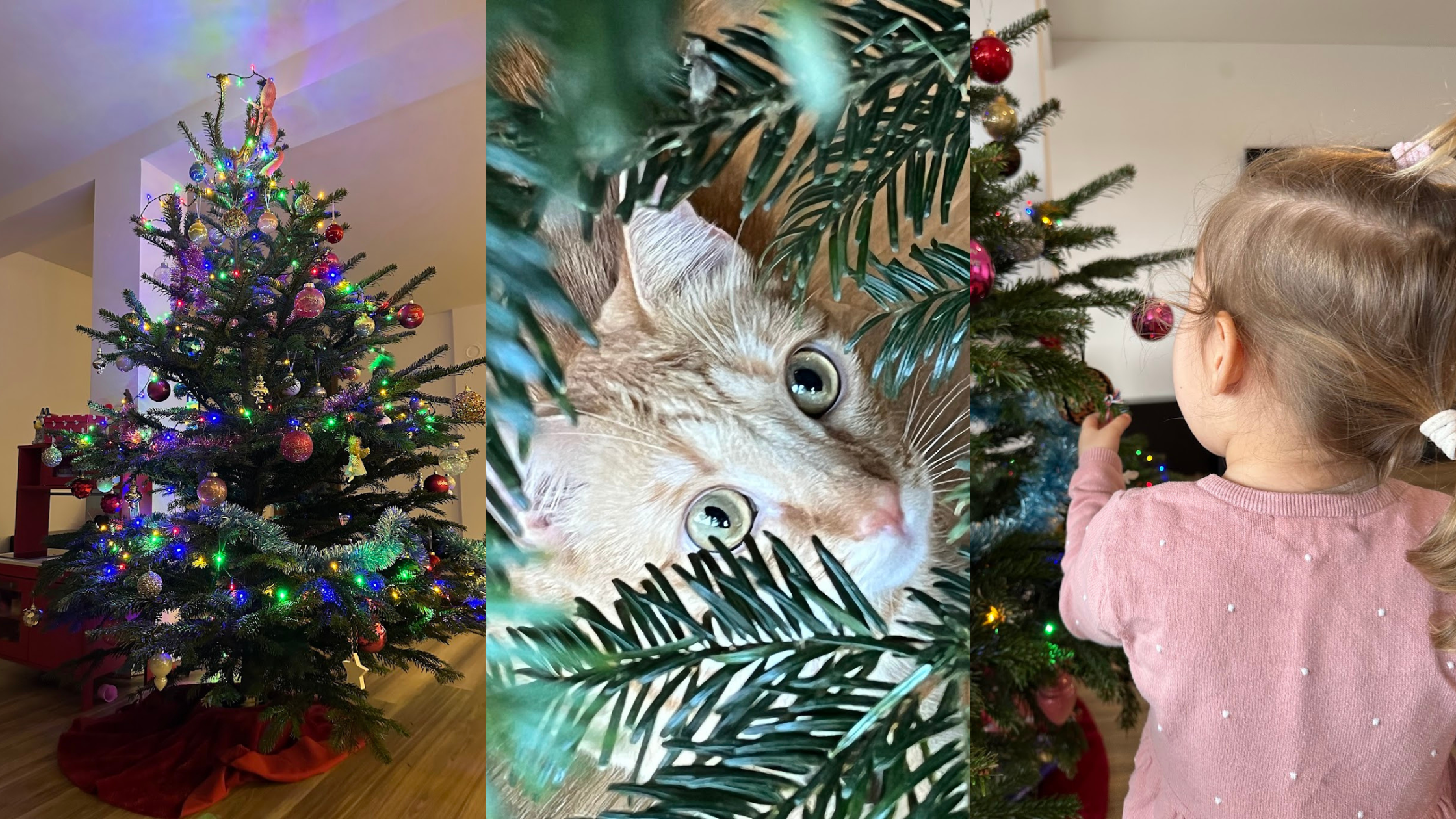
Our Christmas Eve won’t be impressive on Instagram. There will be no matching pajamas. The tree will lean slightly left. The cookies will look like abstract art.
But we’ll be happy. Together. At home. And the next morning, we’ll drive to my parents’ house – coffee in hand, child in the backseat, hearts intact.
We’ll bring gifts, hugs, and actual energy. We’ll stay for hours, maybe the night. We’ll laugh, eat too much, and take a hundred identical photos in front of their Christmas tree, as is tradition.
Because the point was never to avoid family. It was to arrive as our whole selves, not the frazzled fragments left over after pleasing everyone else.
The Call
There will still be guilt. Of course. My mother will sigh and say, “It’s just not the same without everyone here on Christmas Eve.”
And I’ll smile and say, “I know, Mom. But it’s still Christmas. And we’ll be there tomorrow.”
Then I’ll hang up, pour myself a hot cup of tea, and watch my daughter fall asleep by the glow of Christmas lights in her beautifully decorated room.
Because this – this quiet, this laughter, this tiny revolution – is what we’re passing down.
Not rebellion. Permission. Permission to choose peace over performance.
The Next Generation Clause
One day, my daughter will call and say, “Mom, we’re doing our own Christmas Eve this year.”
And I’ll feel that familiar ache – the little sting of being left out. But then I’ll remember this moment, this decision, this calm.
And I’ll tell her, “Good. Make it beautiful.”
Because love evolves. That’s the point.
It’s not about where we gather, but how freely we do it.
And if I’ve done my job right, she’ll know she never has to earn my love through attendance – just existence.
Erika Matic writes about motherhood, boundaries, and the soft rebellion of doing holidays differently. She believes family isn’t measured in proximity but peace – and that sometimes the most loving thing you can say is, “We’ll come tomorrow.”
Leave a Reply